Tracking Indian Restaurant Food: The Secret Calories in Butter Paneer and Garlic Naan
Indian restaurant curries are a culinary masterpiece, but they are also a calorie minefield. Here is the science of why they are so dense—and how to track them stress-free.

Ajay Rathore
March 15, 2026 • 6 min read
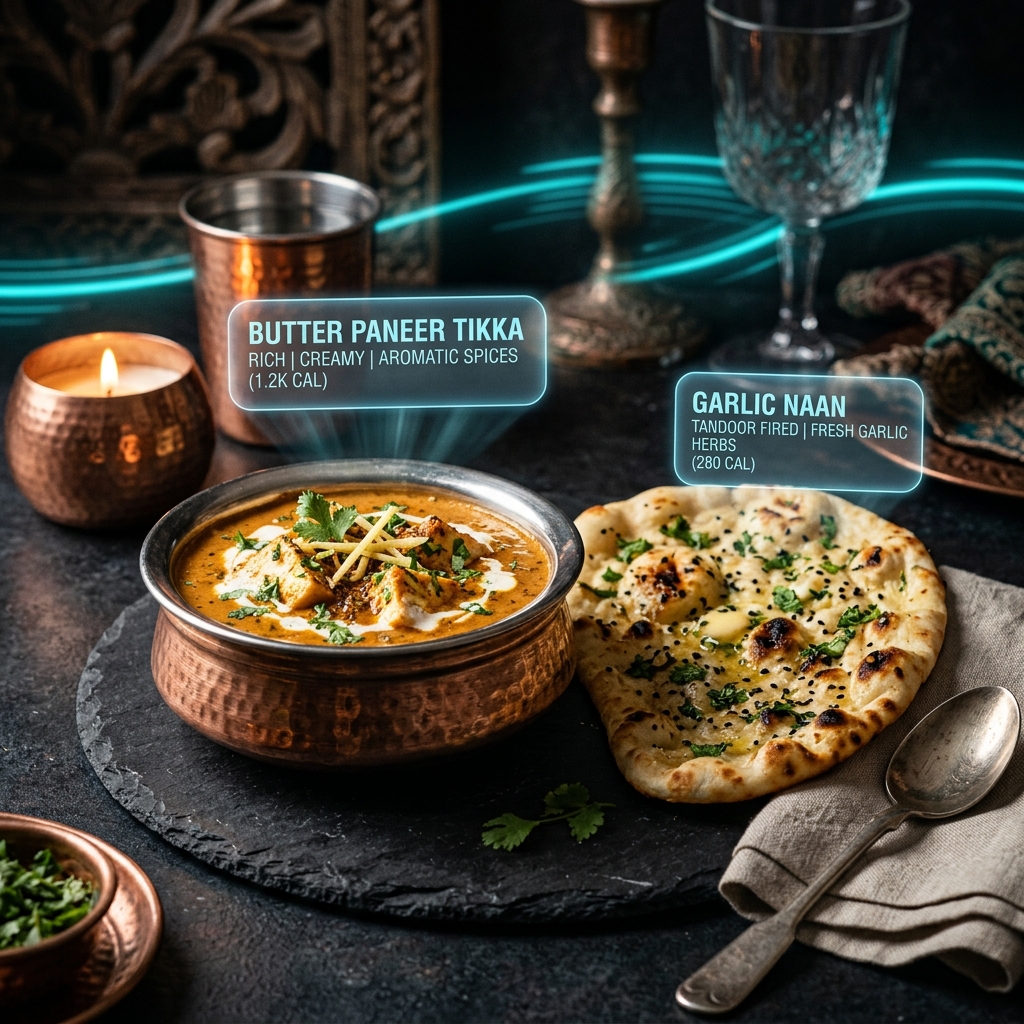
Going out for a North Indian dinner is one of life's greatest pleasures. The aroma of charcoal-fired tandoors, the rich, simmering red gravies, and the butter-glazed flatbreads are incredibly comforting.
However, if you are actively working on fitness or fat loss, Indian restaurant dining is one of the hardest environments to navigate. The caloric density of these dishes can turn a single evening out into a weekend-long setback.
1. Restaurant Style vs. Home Style Cooking
The difference between home-style and restaurant-style Indian cooking lies in the **base gravy preparation**.
At home, curries are light, rely on simple tomato-onion-chili bases, and use a moderate amount of daily cooking oil. At a restaurant, the rich gravies are pre-prepared in massive pots using deep blends of cashew nut paste, melon seeds, poppy seeds, heavy milk solids (khoya), and copious amounts of commercial cooking cream and unsalted butter. This makes the gravies incredibly velvety—but also extremely high in fats.
2. Butter Paneer: The Cream and Cashew Calorie Bomb
Let's look closely at a restaurant favorite: **Paneer Butter Masala (or Butter Paneer)**.
At home, 100g of raw paneer curried in a simple tomato base represents roughly **320 calories**.
At a restaurant, a standard single serving bowl of Paneer Butter Masala can easily reach **800 to 1,200 calories**. Why?
- The paneer cubes are often shallow-fried in oil before joining the gravy.
- The onion-tomato base is blended with rich, calorie-dense cashew butter.
- The chef finishes the dish by melting a thick slab of butter on top and stirring in three tablespoons of heavy cooking cream.
This single curry bowl can easily satisfy over 60% of an average adult's entire daily caloric target!
3. Garlic Naan: The Ghee/Butter Brush Variable
A fresh tandoori Garlic Naan is irresistible. But flatbreads cooked in restaurant tandoors are far from a healthy wheat roti.
Naan dough is made of refined flour (maida), sugar, milk, and fat. More importantly, as soon as the naan is pulled hot from the tandoor clay oven, it is slathered generously with butter or melted ghee using a pastry brush.
A single dry, plain Roti has roughly **90 to 100 calories**. A single butter-brushed Garlic Naan typically hits **280 to 380 calories**—nearly four times the energy density! If you eat two naans during dinner, you are consuming close to 750 calories before you even count the curries.
4. How AI Estimates High-Fat Restaurant Curries
Manual search databases usually fail here because they list "butter paneer" at a uniform home-style calorie count.
Nutraize's visual engine operates differently:
- Reflective Glaze Evaluation: It scans the bright white-cream swirls and high-gloss oil pools resting on top of the gravy to recognize heavy cream/butter additions.
- Paneer Piece Profiling: It counts the visible paneer cubes and analyzes their shape and surface color to determine if they are fresh or pan-fried.
- Contextual restaurant adjustment: It automatically cross-checks portion ratios against average restaurant bowl sizes rather than generic cup sizes.
By visually measuring portions and gloss glare, AI gets a highly accurate real-world calculation.
5. Pro-Tips to Eat Out and Stay Fit
Enjoy your North Indian restaurant dining while keeping your caloric budget in check with these simple adjustments:
- Switch Naan for Tandoori Roti (No Butter): Simply ask the waiter for "Dry Tandoori Roti." It is made of whole wheat and has no butter, immediately cutting 200 calories per flatbread.
- Order Tandoori Starters: Choose dry tandoori starters like Paneer Tikka or Tandoori Chicken over heavy curries. They are packed with lean protein and have much lower fat ratios.
- Snap & Note: Snap a photo before eating and write a quick note like "garlic naan buttered" or "butter paneer tikka." The AI will instantly deliver a calibrated macro estimate.
Don't let tracking anxiety ruin your social dining experiences. Visual logging gives you the clarity you need to enjoy restaurant meals without throwing away your fitness goals.
Track Indian Meals Painlessly
Nutraize was built specifically to solve the complexity of Indian diets. Snap a picture of your dinner and track calories in seconds. Enjoy eating out stress-free.
