Tracking Homemade Multi-Ingredient Meals: The Custom Recipe Nightmare vs. AI
Typical tracking apps force you to act like a food scientist just to log dinner. Visual AI offers a much simpler, faster path.

Ajay Rathore
May 10, 2026 • 5 min read
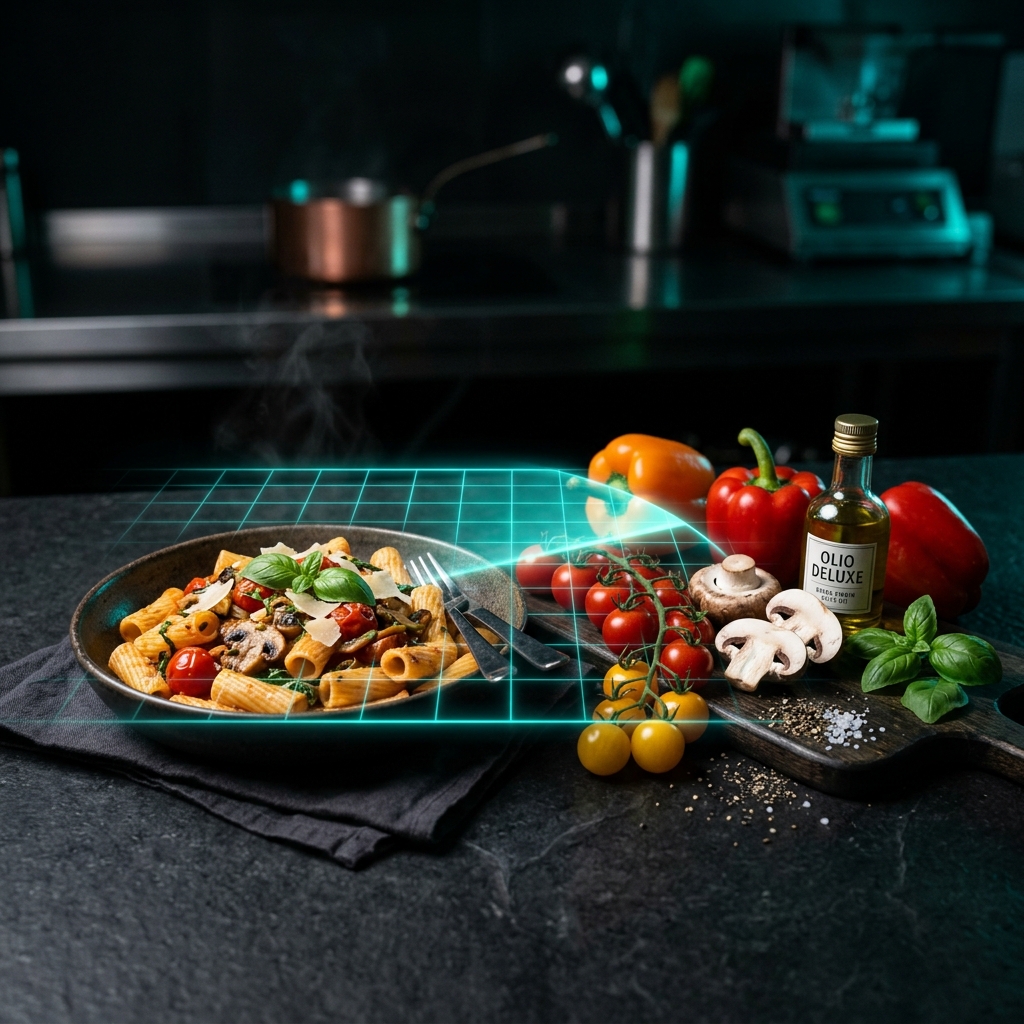
If you've ever tried to lose weight or build muscle while eating real, home-cooked food, you've probably hit a wall with traditional fitness apps.
These apps are fantastic if your dinner consists of a pre-packaged frozen lasagna or a standard fast-food burger. But the second you step into a kitchen and prepare a fresh, multi-ingredient meal from scratch, manual logging turns into a frustrating, multi-step headache.
1. The "Custom Recipe Editor" Nightmare
In most calorie tracking apps, logging a homemade vegetable curry or pasta dish requires you to open their "Custom Recipe Creator." The workflow looks something like this:
- Weigh and log 15 different raw ingredients (oil, garlic, onions, chicken, vegetables, sauces, cheese).
- Enter the ingredients manually into the app.
- Guess the total weight or the number of "servings" the finished pot yields.
- Weigh your actual portion on a digital scale.
- Calculate the correct ratio to log.
This process takes 10 to 15 minutes of pure administrative data entry, completely killing the joy of sit-down meals with your family.
2. Why Recipe Editors Cause People to Quit
Human beings are wired to seek the path of least resistance. When faced with a highly complex 15-step logging chore every single evening, one of three things happens:
- Dieters cheat: They log a generic "vegetable curry" entry from the database that is off by 300 calories.
- Dieters avoid complex foods: They stop cooking healthy, multi-ingredient meals and switch to monotonous "easy-to-track" boring foods like plain rice and plain boiled chicken.
- Dieters quit entirely: By week three, the mental load wins, and they uninstall the app.
The problem isn't a lack of discipline—the problem is the design friction.
3. Bypassing the Recipe Editor: Enter Visual AI
Visual food intelligence changes everything by moving the work from the user to the machine.
Instead of forcing you to build a database recipe card, visual AI analyzes the finished plate. By looking at a photo of your food, neural networks identify the components and estimate the nutritional density of the meal instantly. There is no recipe input required, no manual ingredient lists, and no kitchen scale needed.
4. How AI Estimates Multi-Ingredient Dishes
How does a computer look at a mixed dish like a stir-fry, curry, or loaded salad and estimate the calories? It uses a multi-layered computer vision pipeline:
- Ingredient Segmentation: The AI identifies individual visible ingredients (e.g., mushrooms, tomatoes, pasta spirals, olive oil glazes).
- Volume & Portion Mapping: By checking the plate contours and references, it estimates the 3D volume of the food pile.
- Recipe Heuristics: It references standard culinary preparation models to account for cooking oils and fats that are absorbed but visually hidden.
The system processes these features in under three seconds, serving you a complete macro breakdown without any database hunting.
5. The Precision Trap: Consistent Math Over Phantom Decimals
Skeptics often ask: *But is an AI visual estimate 100% as precise as weighing everything on a scale?*
The answer is: **No, but it doesn't need to be.**
Weighing food feels highly precise, but it is actually a false sense of security. Natural ingredients vary in caloric density (an avocado's fat content changes by season; meat cuts have different fat marbles).
More importantly, **consistency is the only variable that correlates with weight loss success.** An AI visual tracker that is 90% accurate and used 100% of the time will get you incredible results. A digital kitchen scale that is 99% accurate but only used 10% of the time because it is too annoying is completely useless.
Effortless Homemade Meal Logging
Nutraize was built specifically to eliminate the pain of recipe editors. Take a quick photo of your plate and let our visual AI handle the math.
