The Hidden Oil Trap: How Restaurants Add 500 Secret Calories to "Healthy" Meals
Think you're staying in a calorie deficit by ordering a "grilled chicken breast with sautéed broccoli"? Think again.

Ajay Rathore
April 10, 2026 • 6 min read
It's a frustratingly common story. You've been exercising diligently and tracking every single meal at home for weeks, and the scale is moving in the right direction.
But then, your social calendar fills up. You start eating at restaurants a few times a week. Even though you are extremely careful—choosing only the seemingly healthy, plain-looking meals like lean protein, grilled fish, or plain garden salads—your weight loss completely stalls. You hit a mysterious plateau despite "tracking everything."
1. The Chef's True Incentive: Flavor, Not Fitness
The primary rule of restaurant dining is simple: **professional chefs care about how food tastes, not how many calories it has.**
To make meals taste delicious and texture-rich, kitchens rely heavily on cooking fats. Even a simple dish like grilled asparagus or steam-sautéed mushrooms is doused in heavy butter or oil. Chefs baste meat cuts continuously, apply oil-heavy marinades, and add oil to salad vinaigrettes. Because these fats absorb into the food or coat it as a clear glaze, you eat them without ever realizing they are there.
2. The Shocking Calorie Math of Cooking Oils
To put the hidden fat issue into perspective, let's examine the raw math of cooking oil:
- 1 Tablespoon of Butter: 102 calories (pure fat)
- 1 Tablespoon of Olive Oil: 119 calories (pure fat)
- 1 Tablespoon of Ghee/Canola Oil: 120 calories (pure fat)
A typical restaurant kitchen uses anywhere from **two to four tablespoons of oil or butter** to prepare a single "healthy" grilled chicken plate. That simple culinary choice secretly adds **240 to 480 calories** to your meal—enough to completely erase your daily calorie deficit!
3. Why Generic Database Lookups Fail You
When you eat out and manually search for your meal in a traditional app, you usually type in "grilled salmon with broccoli."
The search results will show a standardized, generic database entry of roughly **350 calories** (calculated using dry raw salmon and plain boiled broccoli).
However, the restaurant salmon plate sitting in front of you actually contains **680 calories** due to butter basting and oily vegetables. By logging the generic entry, you are underestimating your actual calorie intake by **330 calories** in a single sitting!
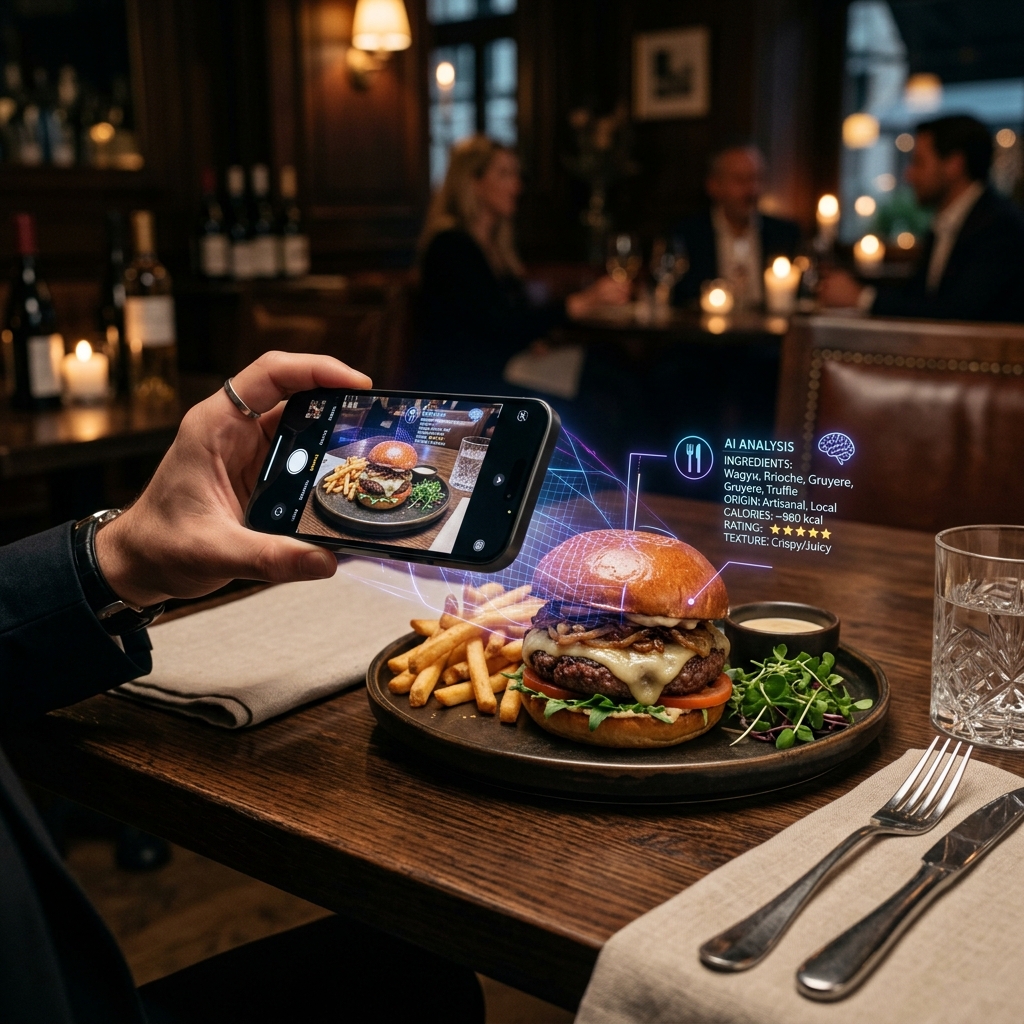
4. How AI Visual Recognition Detects Hidden Fats
How does visual AI bypass this hidden trap? By combining optical analysis with culinary context:
- Optical Reflectivity (Glare Analysis): The AI is trained to evaluate light reflections and surface glazes on vegetables and meats. Heavy oils create distinct high-glare surfaces that the neural network recognizes to scale up the fat estimate.
- Location Contextual Heuristics: If the AI knows you are logging a meal from a restaurant rather than your kitchen, it automatically shifts the recipe estimation matrix, applying a restaurant fat adjustment coefficient (+20% fat standard).
- Volume Mapping: It matches portion height to calculate thick butter pools or sauces left on plates.
Instead of relying on idealized database values, **Nutraize** estimates the calorie density based on how the food actually looks.
5. Dining Out Survival Guide: How to Track Correctly
You shouldn't have to stop eating out or isolate yourself socially to hit your fitness goals. Here is how to keep your log accurate when dining out:
- Snap the Photo Before Eating: Get a clear, angled shot of your entire plate before your first bite so the AI gets a full visual capture of portions and glazes.
- Use Context Flags: Add a quick note to your photo like "restaurant meal" or "very buttery." The visual AI will instantly combine your visual cues with context to compute highly accurate real-world calories.
- Order Sauce on the Side: This is a simple trick to dramatically reduce total fat while making the food easier to visually analyze.
Stop guessing and letting hidden restaurant calories sneakily sabotage your progress. A simple visual log provides the objective baseline you need to enjoy dining out while keeping your weight loss firmly on track.
Track Restaurant Meals with Confidence
Nutraize's visual intelligence accounts for hidden oils and restaurant portion inflation. Enjoy eating out without hitting a weight loss plateau.
