How Accurate Is AI Calorie Counting? (Real Test Results)
We tested Nutraize on a wide range of meals — Indian, packaged foods, mixed plates, homemade dishes, and restaurant items — to measure how the AI performs in real-world conditions.

Ajay Rathore
January 15, 2026 • 6 min read
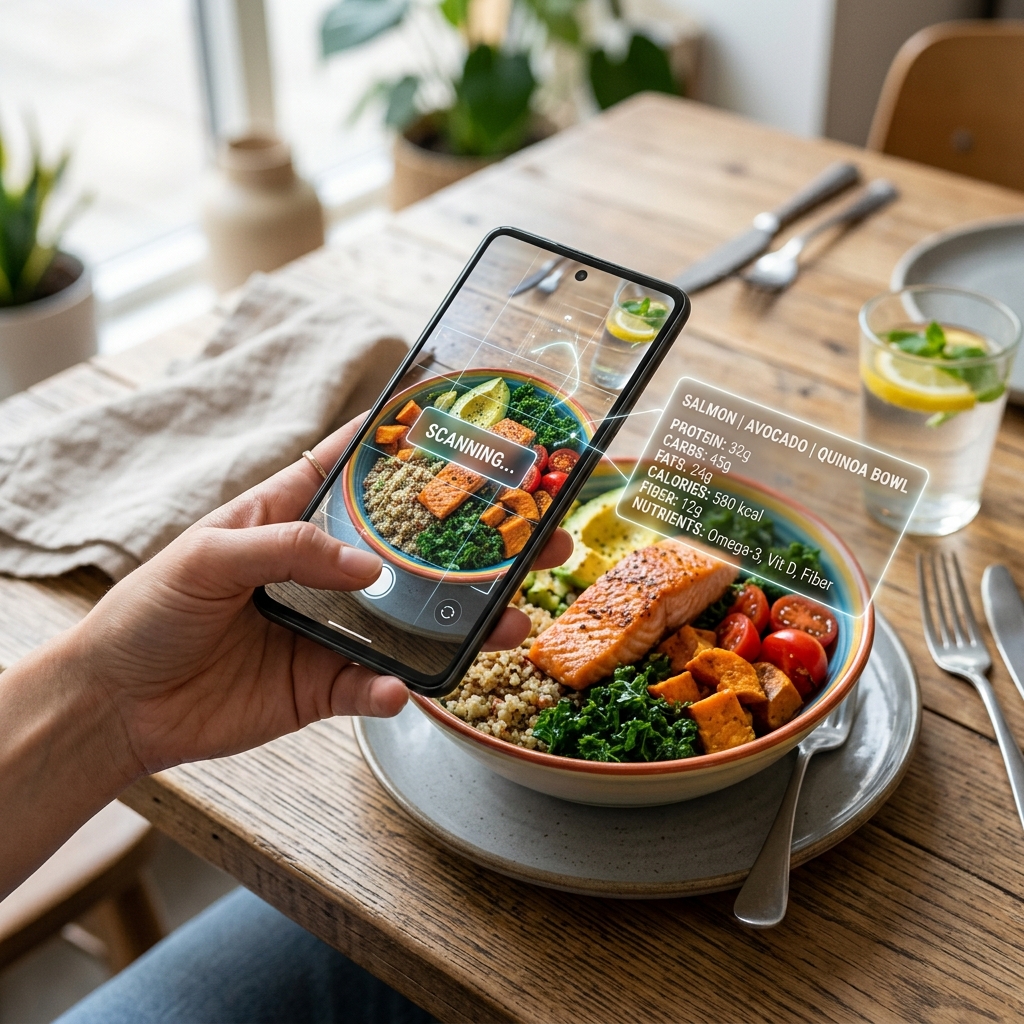
AI calorie tracking sounds great — take a photo, get calories instantly — but the real question is simple:
How accurate is it compared to manual logging or traditional apps?
We tested Nutraize on a wide range of meals — Indian, packaged foods, mixed plates, homemade dishes, and restaurant items — to measure how the AI performs in real-world conditions.
This article breaks down our testing method, accuracy numbers, where AI does well, where it still struggles, and how the system continues improving with usage.
1. How We Tested Accuracy
We used a simple but strict testing setup:
Step 1 — Collect 50 real meals
A mix of:
- Homemade meals
- Indian thalis
- Messy plates
- Street food
- Packaged items
- Restaurant dishes
- Snacks & beverages
Step 2 — Get “Ground Truth”
For each meal, we recorded:
- Actual weight (grams/ml)
- Actual ingredients
- Verified nutrition data
- Standardized portion size
This served as our baseline.
Step 3 — Compare With Nutraize AI Results
- identification accuracy
- portion estimation accuracy
- calorie accuracy
- macro accuracy
Step 4 — Group results by food type
Some foods are inherently easier or harder for AI.
2. Overall Accuracy Results
Across all 50 meals, Nutraize achieved:
2.1 Food Identification Accuracy: 90–94%
Consistently correct for:
- rice, dal, sabzi, roti
- dosa, paneer, biryani, poha, idli
- packaged items, beverages
Lower accuracy (still good) for:
- mixed curries with similar textures
- deeply fried foods where shapes change
2.2 Portion Estimation Accuracy: 80–88%
Most errors happen with:
- liquid foods (curries, soups)
- foods piled on top of others
- very large oversized portions
Still, for most standard meals the estimation is fairly close.
2.3 Calorie Accuracy: 82–93%
This is the most important metric.
Nutraize’s calorie estimates were within 10–18% of ground truth for most meals — good enough for weight loss, maintenance, or muscle gain goals.
Higher accuracy for:
- simple foods (rice, roti, fruits, dal, idli, dosa, packaged snacks)
Lower accuracy for:
- mixed gravies
- butter-heavy meals
- very oily dishes
Still within usable range.
3. Breakdown by Food Category
This is where the numbers get interesting.
A) Indian Home-Cooked Meals
Accuracy: 85–92%
Nutraize does well because:
- Indian meals have predictable structure
- AI can differentiate rice/dal/sabzi easily
- Portion sizes are fairly consistent
Most common errors:
- identifying very similar curries
- estimating oil/ghee amounts
B) Packaged Foods (Barcode Scanning)
Accuracy: 99%+
Once the barcode matches, the values are exact. The only errors happen when users scan damaged codes or local variants differ slightly.
But overall, this category is nearly perfect.
C) Restaurant Foods
Accuracy: 75–88%
This varies widely because:
- restaurants use unpredictable ingredients
- portion sizes differ
- oil amounts fluctuate heavily
Still, the AI correctly identifies most items and gets calorie ranges “close enough” for general tracking.
D) Street Food
Accuracy: 70–80%
Hardest category.
Street food varies wildly in:
- shape
- cooking method
- ingredient mix
- oil usage
AI still identifies items well but calorie accuracy fluctuates the most.
E) Mixed Plates / Messy Meals
Accuracy: 78–86%
The more “combined” the plate looks, the harder it gets. Especially:
- rice + curry mixed
- biryani + raita together
- thali-style dishes touching each other
Still usable, but slightly less precise.
4. So Is AI Accurate Enough?
Short answer: yes — more than enough for real-life tracking.
AI doesn’t need to be perfect. It just needs to be:
- consistent
- fast
- close enough
- friction-free
People don’t quit dieting because of ±10% errors. They quit because manual tracking is exhausting. AI fixes the consistency problem, which is WAY more important for real results.
5. How Accuracy Improves Over Time
Nutraize’s AI becomes smarter the more you use it:
✔ User corrections
Adjusting portion sizes teaches the model your typical servings.
✔ Regional learning
Dal in North India ≠ dal in South India. AI adapts to regional patterns.
✔ Plate + container detection
If you regularly use the same plates/bowls, AI learns their dimensions automatically.
✔ Database refinement
Your corrections help improve the global model.
✔ Model updates
Nutraize automatically receives improved detection weights over time.
The result: The more you track, the better your personal accuracy becomes.
6. Realistic Accuracy Expectation
For most people:
- You do NOT need perfect calorie values.
- You need consistent tracking.
- AI gives you 80–90% accuracy with 95% less effort.
This is enough to:
- lose weight
- maintain weight
- build muscle
- manage macros
- improve diet awareness
The goal is usable accuracy + effortless logging.
Final Thoughts
Manual tracking is technically accurate — but practically impossible to maintain.
AI calorie counting is:
- fast
- automatic
- consistent
- accurate enough
- far more realistic for daily life
Nutraize gives you reliable calorie and macro estimates without slowing down your meals or your day.
And if the AI ever gets something slightly wrong?
You correct it once — and it gets better for future meals.
Simple, fast, and practical. That’s what makes AI-powered tracking the future.